Thursday, January 11, 2007

Decide If This Is A Business Or A Hobby

I'm still a beginner at Self-Publishing but certain principles carry over to almost all endeavors.

The No. 1 reason small businesses fail is undercapitalization. They didn't have enough money to do whatever was necessary to take that next crucial step toward success. Humans are forever underestimating the cost of reality. Especially when it comes to activities that have roots in their whimsy - like flipping a house, writing a book, etc. It really shouldn't be that big an issue if you keep your eyes wide open and plan for the worst case scenario. But it ALWAYS is.

It gets especially bad when they realize half way in that they don't have enough money and then start scrimping on key issues that will eventually doom the project.

I believe everyone should write a book. Parents and children should write books together. Groups of friends can write books. With the Print-On-Demand industry blowing up everyone should be able to write a book and publish it for less that a couple hundred dollars. I think the world would be a nicer place if everyone did this. Even artists should write books.

The problem is if you haven't been writing and illustrating your entire professional life it's really unlikely that you can understand the professional edge that's required to get to the top of the marketplace. After much trial and error you can get there but you can't fall out of bed and write a best-selling book. There are exceptions to everything but.....

And then there's the problem of making money.

I have no illusions. I don't think I can make money publishing my books. If I were to be totally honest I'd tell you my only goal is to create books that can critically compare to most of those in the marketplace. I guess I do have a second goal. Not to lose an extraordinarily large amount of money in the process.

I only tell you this because unless you have a lot of money to burn before you ever reach Amazon.com with your book, you won't make it. The book has to be professional to succeed there. In the case of a picture book I'd say you'd have to have at least $10,000 to think about starting the project.

A professional artist costs several thousand dollar if you can find one that will work with a first-time author. Because of the color you'll have to spend several thousand dollars on offset printing. Marketing. Cover Design. Formatting. Yeah, you probably need more than $10,000.

I can see some of you shaking your heads no. You can't say I didn't warn you.

Michael LaLumiere

Tuesday, January 9, 2007

Welcome To The Self-Publishing Business

Kim and I received a few more rejection letters. It was now official, I was at a total standstill regarding these manuscripts. And as a newbie I was surprised to have reached this standstill so soon in the project. As a former professional in the publishing business I thought I knew better.

Then one day I stuck "Self-publishing'' into the Google search window. I was shocked by what I found. There was a big, wide world based on self-publishing. Before that moment I had no idea. I was embarassed I didn't know anything about it but I was determined to discover what I could as fast as I could.

The self-publishing business is way farther along now than it was back then. The rise of improved digital printing and Internet marketing have changed everything. We're at the beginning of the end of what the Book Publishing World use to be.

At that time - 2 plus years ago - vanity presses were trying to morph into POD (Print on demand) companies. Their goal: get a chunk of your money up front. Some gave you an expensive but quality product. Others gave you an expensive box of nothing much.

I settled on Lulu.com. The great thing about LuLu was there was no expensive up front fees. Basically, you could get a book printed digitally and see how it turned out. This was great for seminar books that I wanted to sell but not so good for a full-color picture book.

They couldn't print hardcovers at the time. And color reproduction was only so so and cost prohibitive for retailing. So now I had a soft-cover, color picture book where the color wasn't great. I would have to sell it for $16. Nobody's going to buy the product for that price if at all.

I was stuck again. Oops I forgot to tell you the trials and tribulations of finding an illustrator for the book. Sorry, it nearly put me in a coma - i must have burned it out of my memory.

Michael LaLumiere


Sunday, January 7, 2007

What The NY Book Editor Didn't Say

After the "Snow'' comment the NY Book Editor went on to say she thought it was a nice story, had a nice character, maybe was a little too long, blah, blah, blah.

As a long-time editor and observer of life I know there are three Grand Canyons between a professional saying they really like something and everything else. Professional editors so rarely get exactly what they want they'll gush at anything close. So watching this editor thumb through the pages it was obvious "Birthday Snow'' was just another routine manuscript to her and she would forget it as soon as she walked out the door.

Up on the podium book editors like to say that every editor is different and while one might hate a manuscript the next editor up the street may love it. So you should keep sending out your manuscript in hopes of a miracle. I don't buy that. Of course, it happens. But in 2007 you're more likely to become a professional basketball player than get your children's book published by a medium-to-big publishing house. The book publishing industry has in its little way become the Hollywood Movie industry. And "Birthday Snow,'' admittedly was not a blockbuster.

So what are you going to do now Mr. Children's Book Author?

First an update. As I write this, a pallet of "Birthday Snow'' books sits in a container ship making its way across the Pacific. My little publishing company printed them. I think it's a fine book that will appeal to children and parents. The big issue is marketing and distribution. Believe it or not that's much harder than publishing and will determine how many people get to read it. I think it's been more than two years since I sat across the table from that book editor. That 10-minute discussion was actually a lot of help. But as you can see it took a long time to get those books on a container ship. There was a lot more work to be done.

So what had I learned?

"Birthday Snow'' would not be bought by a big publishing company. The book wasn't good enough yet. I wasn't sure it would ever be good enough. That marketing departments ran the publishing houses. That the book editing business wasn't about words and editing. And that I needed to be convinced that I should move forward.

Michael LaLumiere

Thursday, January 4, 2007

What The New York Book Editor Told Me

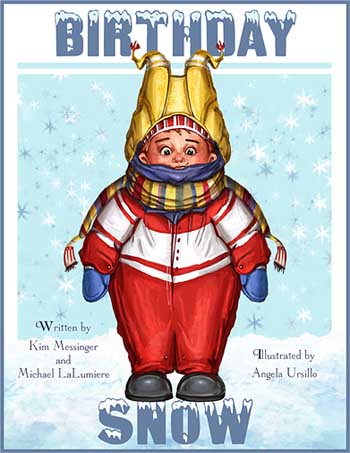
By the time I arrived at the big LA Children's Book Conference we had already received a couple rejection form letters on "Birthday Snow,'' - the manuscript we decided to send out first. It was also the manuscript that the NY Book Editor would be critiquing - face to face - later in the conference.

"Birthday Snow,'' is a nice mother-son story that got the feel-good response we hoped for when we tested it with children and parents.

I found the LA conference to be a dismal event. There were probably about a thousand people attending - more than four times the amount of new children's books that would be published that entire year. And the trend was decidedly less books published as each year passed. So not all were happy campers.

One after one the publishing house editors/speakers went to the podium and told their sad little tales. Basically, the book business was being run by the marketing departments. If the marketing department didn't buy in there would be no book. And an editor wasn't going to take any chances because one too many non-sellers and they would be out of a job.

So if you were a celebrity, or you had a string of successful books already or you had a dynamite marketing hook you could get a book published. There rest of you, well, good luck in the slush pile.

The feel-good stories that year at the conference were the pigeon on the bus and how to be a pirate books. The author of the pirate book was on a panel and she told of the enormous length of time - years and years - it took to get it published.

During the entire event only one speaker ever mentioned self-publishing. That was an editor in a break-out session. He made passing reference to "The Christmas Box.'' the all-time, self-publishing success story. He said he didn't know why but it just kept selling so anything was possible. I was beginning to think maybe it was the book editors that were the problem.

So Kim and I arrived for our critique. Across the table from us was a professional-looking, early 30-something editor from a big publishing house. She was very nice and personable. After we exchanged pleasantries she looked down at her roughly written page of notes.

I can't remember exactly what she said but it went something like this:

"Well it's good that it's about snow. You can sell a snow book."

Michael LaLumiere


Monday, January 1, 2007

On The Trail Of Validating Manuscripts

Last time I wrote about sending manuscripts to freelance editors who provide critiques-for-hire.

About the same time I joined The Society of Children’s Book Writers and Illustrators (SCBWI.org). That allowed me to find out about and attend small regional children's book conferences. These conferences were important for two reasons.

One, I could get my manuscripts critiqued (you sign up in advance). The downside is that only about 50 percent of the time do you get a real book editor doing the critiquing at the smaller conferences. Script doctors do the rest. Still, I believe any reasonably professional critique is valuable.

Two, these conferences were mostly attended by wannabes like me and they peppered the speakers (book editors) with all the questions I wanted to ask. A lot of the questioning showed the frustration of would-be authors with the state of the children's book industry (more about this later). The grilling of these book editors and their lack of meaningful answers helped shape the direction I would eventually take.

The critiques of our manuscripts came back positive. Mostly the critiquers were saying good stories, yes they're potentially publishable, they need sharpening. Do you think a publisher would buy the stories? Hard to say. This isn't an exact science. Fine.

That was enough for us to polish them up and send them out to some publishers. I also signed up for the big 4-day SCBWI spring conference in LA. A lot of editors from big publishing houses were speakers. And I would be guaranteed a face-to-face critique from a book editor. In my opinion, a person like that was the only true judge.

As I arrived in LA for the conference, I was about a year into this project. Next, what the book editor said.

Michael LaLumiere

Thursday, December 28, 2006

The Things You Don't Know That You Don't Know About Writing Children's Books

So there I was. I had three manuscripts in front of me. A respected colleague had just ripped my face off for spending time on such folly. What was I going to do now?

He was blasting the idea of the concept more than the manuscripts. But he had looked at the stories and was still willing to yell, "What's the point.''

That certainly gave me pause even though the niche we were going after was closer to low-key, warm and fuzzy, than the classic children's tale that would change the world.

I consider myself a professional. If I get a negative critique I'm not going to blow it off like so many beginning writers do. They somehow rationalize that it's the audience's mistake if they don't get it, not theirs. In many ways that's what gives self publishing the bad reputation it has.

So my attitude became, "The world is going to have to convince me that this or these stories are good enough to be published by somebody that was a professional.'' AND FRIENDS AND FAMILY DON'T COUNT. Friends and family are always going to be kind and pull out the one positive thing you can bask in. The publishing world is a brutal place to make a living so the only time you should take Friends and Family comments to heart is when they say something negative. Then you have a BIG PROBLEM. If they're willing to bring it to your attention you have a show stopper on your hands.

So how could I start getting meaningful feedback from the world?

There's a million freelance children's book script doctors and editors out there. That's where I started. I sent a manuscript to two different freelance editors - one on the West Coast and one on the East Coast. They generally charge per page. You will pay anywhere from $60 to $200 for a picture book manuscript critique.

The first thing you'll notice from this experience is there are basic picture book and general book things that you need to know. Of course I didn't know them and the script doctors got to call me a newbie in so many words for not knowing the basics in a business that you profess to be working in. Great start.

Here are the three silliest things I didn't know before i started this process:

If you write a sentence on a piece of paper or a computer file you own the copyright on that sentence. Beginning writers make a big deal about plastering copyright over everything so no one will steal their words. Can't be done you newbie.

If your goal is to send your manuscript to a publisher don't worry about illustrations. Publishers don't want illustrations from authors. Why? Authors don't have a clue when it comes to the illustration level required to sell a book. Publishers use their own illustrators for good reason.

A picture book has a format. It must be done in 32 pages. Not 30 or 36. 32. You can do 36 pages but no publisher will buy it. It's a printing press thing rookie.

Way to go Michael. Or should I say Mr. Professional.

Michael LaLumiere


Tuesday, December 26, 2006

So You Want To Write Books For Children?

A few years back I was working on a non-fiction book with writing partner Kim Messinger. The subject was inclusion in regards to children with special needs. Kim is a director of a preschool on the East Coast. She has hundreds and hundreds of children's books.

One day we started talking about what she thought was missing in the children's books being published today.

Her complaints started with language. She says people always underestimate how smart children are. They write down to them. The language in these books should be much richer, she said. "Children deserve that.''

Her next biggest complaint was the lack of stories that parent and child could read together that they could relate to together. I guess she wasn't enamored with stories about farting dogs and pigeons driving buses. For now I'm going to be calling these missing stories feel-good, parent-child stories.

That got me curious. I went to the bookstore and looked around. There were funny books and books with cute ideas but I couldn't find many heart-warming, every-day morality tales that a parent would be happy to read to their child. And very, very few with rich language.

I don't have children so I started bugging her about what 4, 5 and 6-year-olds talk about. What's important to them at that age. How did she relate to her own children and the hundreds that have attended her school.

I came up with three bare-boned stories/main characters and showed them to Kim. From there we rewrote and edited them together and came out with what we considered three fairly good picture book manuscripts.

I thought to myself, "Hey I can do this. No problem. I've found a new career.''

I emailed the stories to an old newspaper colleague of mine. I have great respect for this guy as both a writer and editor. I was expecting rave reviews and a few minutes of basking in the glow of his applause and autograph-seeking.

But first there was shock and surprise. He could not believe that an old, hard-bitten, no-nonsense, news editor would write children's books.

Then it was my turn to be shocked and surprised. He went on a three-page rant that could be summarized as: Every Joker Thinks They Can Write a Warm, Fuzzy Children's Story. You Loser. Something like that. And he was right. It was a wake-up call I needed and something I think everyone needs to remember. Not the loser part. The other part.

Michael LaLumiere